500,000 trees planted as youth-led climate action gains ground in Makueni, Kiambu and Kajiado
June 9, 2026
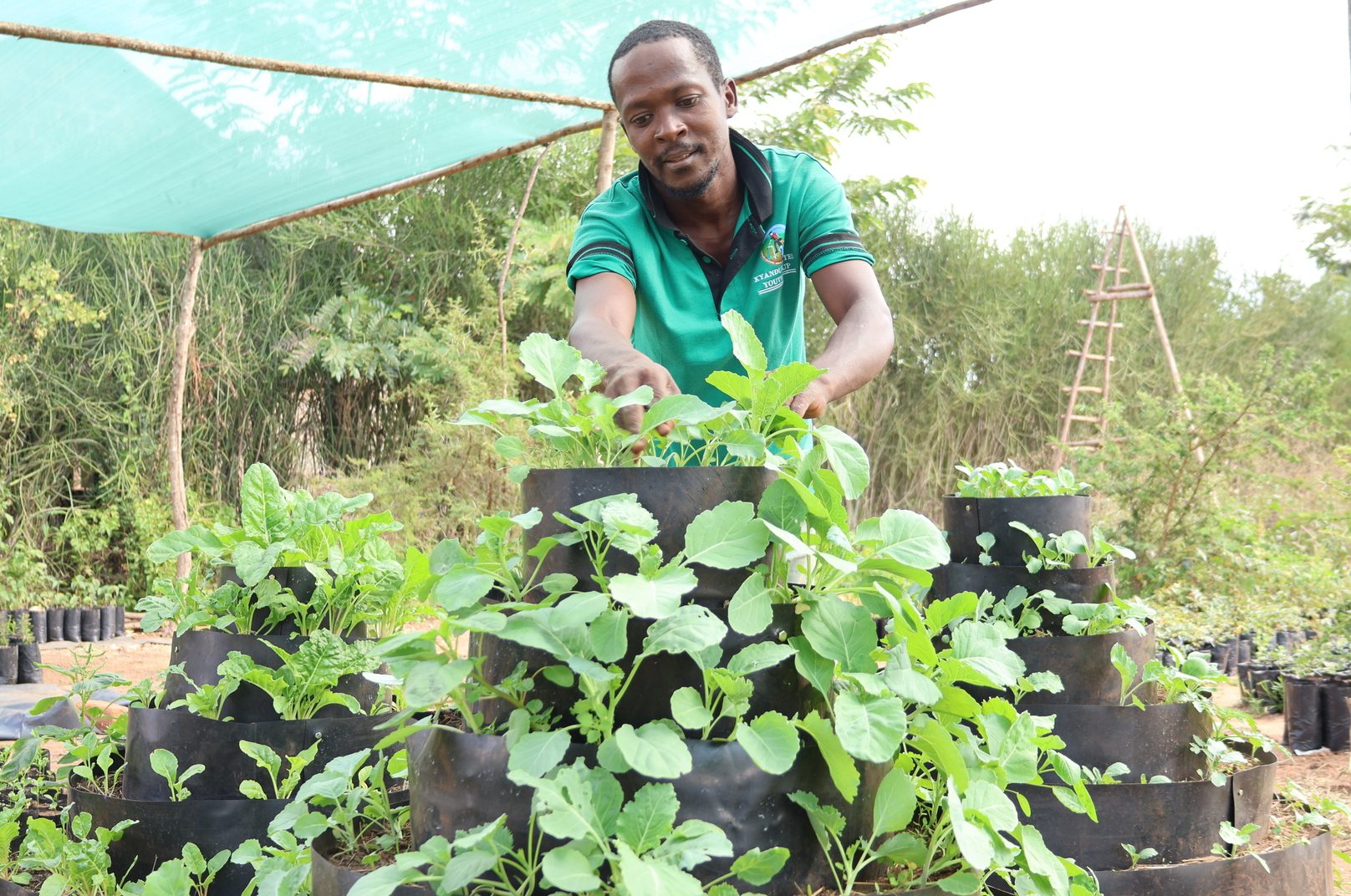
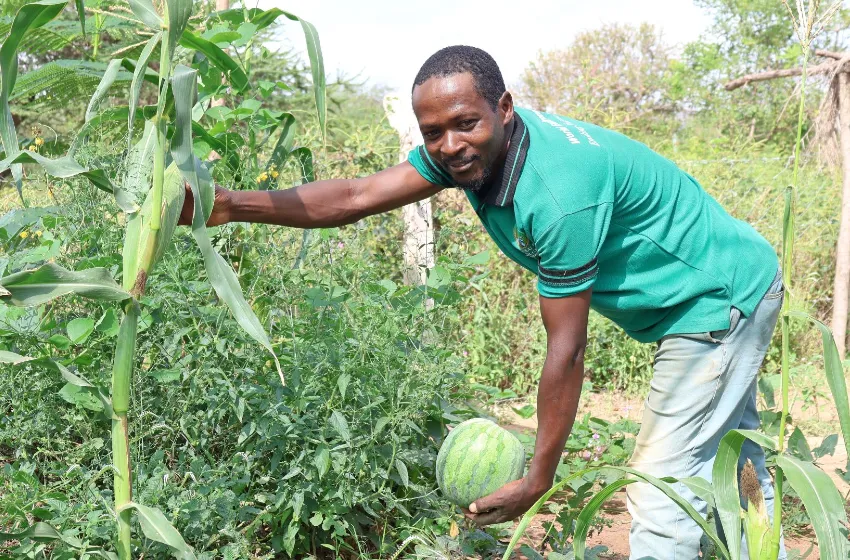
Daniel, 33, a member of Kyandulu Youth Empowerment Network, Makueni County tending to his kitchen garden.
More than 500,000 trees have been planted across Makueni, Kiambu, and Kajiado counties since October 2025 through the Re-greening for Resilience and Regeneration Project.
The initiative, supported by Dow and ChildFund, has also established 60 community tree nurseries with the capacity to produce up to 1.2 million seedlings annually and trained 943 farmers, including women and youth, in climate-smart agricultural practices.
The program, now in its second phase, builds on earlier gains from phase 1, which restored about 360 acres of degraded land across public spaces and learning institutions in Makueni, Kajiado, and Nairobi counties. It is expanding this progress by linking environmental restoration with livelihoods through equipping communities with skills in green entrepreneurship, promoting large-scale tree planting, strengthening community tree nurseries, and supporting the adoption of climate-smart farming practices such as kitchen gardening.
Youth-led climate-smart agriculture takes root in Makueni
In Makueni County, Daniel, 33, a father of two children (4 and 7 years), is part of how the shift to climate-smart agriculture is taking shape on the ground.
Daniel is a member of the Kyandulu Youth Empowerment Network (KYEN), a group formed in 2022 by 30 young people who initially came together to address persistent water shortages by rehabilitating water kiosks and boreholes in their community. Over time, the group has expanded its focus to include environmental restoration and climate-smart agriculture as a way of tackling both water and food insecurity.
The group has strengthened its capacity in climate-smart agriculture, including nursery establishment and management, and received 10,000 seedlings and seeds to support their work. At the same time, ChildFund has invested in building the capacity of the youth in tree seedling nursery management, climate-smart agriculture, and financial literacy and village savings and loans, skills that are now shaping how members manage and sustain their growing income streams.
Since the beginning of the year, the group has planted about 40,000 tree seedlings across Makindu Sub-county. These include fruit trees such as mango, citrus, pawpaw, and tamarind—carefully selected to adapt to the climatic conditions of the semi-arid climate in Makueni, while also creating future ‘green income’ opportunities. The group also has a monitoring team that periodically monitors the survival of planted seedlings in the community for long term sustainability. Although still young, the trees are already part of a longer-term vision for restoring degraded land and strengthening livelihoods.
“For us, these trees are not just about the environment,” Daniel says. “They are about food, income, and making sure our children grow up in a place that can sustain them.”
Green livelihoods and benefits to children
At the household level, Daniel has also embraced kitchen gardening, growing collards and other vegetables using simple climate-smart practices such as mulching to conserve soil moisture. These gardens are becoming a reliable source of food, helping reduce dependence on markets and ensuring that his two children have more consistent access to vegetables.
The benefits of environmental restoration to livelihoods are already beginning to show through the group’s nursery activities. Each month, the youth group sells about 500 seedlings at Ksh 50 per seedling, generating about Ksh 25,000, an increase of 230%, from the 150 seedlings they were selling monthly before being trained on agri-business and consequently increasing their seedlings stock, variety, and quality.
Through the financial literacy training, they are now able to manage this income more effectively, saving collectively, planning expenditures, and reinvesting part of their earnings back into their tree nursery operations.
For Daniel, this has translated into greater household stability. His share of the income supports everyday needs, including food and essentials for his children. The predictability of even small earnings has helped reduce reliance on uncertain seasonal farming.
Beyond their own households, the group is extending its impact into their wider community. They have revived environmental clubs in four primary schools, including Kyandulu, Wiiva, Ngwiwa, and Mukameni. They work with teachers and learners to establish green spaces through tree planting and environmental awareness.
“We teach the children that they have the responsibility to take care of the environment,” Daniel says.
Within the community, the group’s work is steadily gaining visibility. Their nurseries, tree planting efforts, and kitchen gardens are becoming practical examples of how climate-smart agriculture can be applied under local conditions. Other farmers are beginning to adopt similar practices, encouraged by the link between these approaches and improved household wellbeing.




Related Resources
Childcare centre offers a lifeline for student mothers and their children in Rongo University
Childcare centre offers a lifeline for student mothers and their children
Turkana County embraces orange-fleshed sweet potato farming
The Orange-Fleshed Sweet Potato (OFSP) Project is transforming lives through improved nutrition and livelihoods in...