Climate-smart dairy farming is boosting milk production in Laikipia and Nyeri.
June 9, 2026
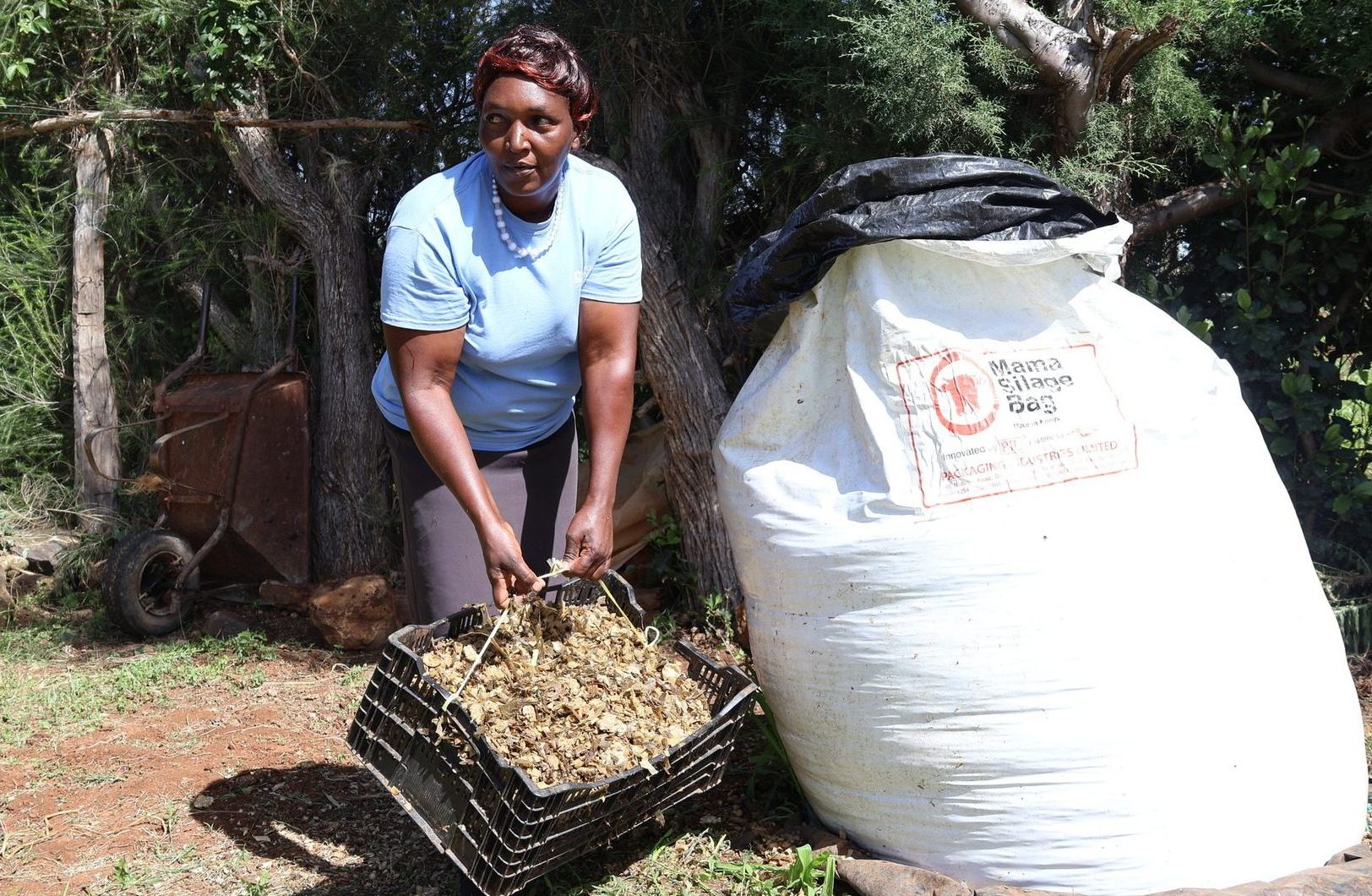
Purity during the preparation of silage using the Mama Silage bag.
Milk production is rising sharply among more than 400 farmers across 130 households in Nyeri and Laikipia counties. Average yields have increased from 5 liters to 16 liters per cow per day, pushing total daily production from 775 liters to 2,480 liters, especially during the dry season when the farmers are using silage; part of efforts to adopt climate-smart dairy practices under the Lishe Bora na Mama Silage project.
Building Climate-Smart Dairy Enterprises
The Lishe Bora na Mama Silage Project, funded by Dow and implemented by Pioneer Child Development Programme in partnership with ChildFund, is helping smallholder farmers transition from subsistence and traditional dairy practices into climate-smart dairy enterprises. The project equips farmers with practical skills in fodder production, silage making, and agroforestry, while strengthening access to extension services, input suppliers, and financial support. Climate-smart fodder trees and grasses such as Brachiaria, Calliandra, and Leucaena have enabled farmers to produce and preserve feed, reduce climate-related risks, and sustain milk production year-round.
In Laikipia County, Purity’s experience shows how this approach is improving both productivity and household resilience. She farms 2.5 acres, growing napier grass, kale, and beans. She started in January 2025 with one cow and depended mainly on income from the sale of vegetables. Today, she keeps three cows, with two currently producing between 15 and 23 liters of milk each per day, up from about 8 to 10 liters before. Selling her milk at KES 50 per liter, she now earns up to KES 2,300 per day from milk, making dairy her main source of income.
From traditional feeding to climate resilience
Before adopting climate-smart practices, feed management was a constant challenge. Purity stored fodder in pits lined with polythene, which was costly and unreliable. The material often tore, and rodents destroyed the feed. During dry periods, she spent hours each morning cutting grass, leaving little time for her family or other farm activities.
After receiving training on silage making, she shifted to using Mama Silage bags and now has three in use. The bags allow her to preserve feed safely, reduce losses, and maintain quality. She prepares silage during the rainy season and stores it for about three weeks before feeding it to her cows, ensuring a steady supply even during dry spells.
This shift has reduced the impact of seasonal changes on her farm. Her cows now have consistent access to quality feed; milk production remains stable, and her reliance on expensive commercial feeds has dropped. It has also changed how she manages her time. She now spends about 30 minutes each morning feeding her cows, compared to the hours she previously used to cut grass. This gives her time to prepare her children for school, manage her household, and deliver milk to the market.
“Before I learned how to make silage, my cows suffered during the dry season. Now I have enough feed stored, and my milk production has improved. I’m saving some money to subsidize my children’s school fees. I would encourage other women to embrace silage,” she says.
Purity’s farm is now a practical example of how climate-smart dairy enterprises can work for smallholder farmers. By combining improved fodder production, feed conservation, and better farm management, she has moved from uncertainty to stability. Her success is encouraging other farmers in her area to adopt similar practices and invest in more resilient dairy systems.




Related Resources

Childcare centre offers a lifeline for student mothers and their children in Rongo University
Childcare centre offers a lifeline for student mothers and their children
Turkana County embraces orange-fleshed sweet potato farming
The Orange-Fleshed Sweet Potato (OFSP) Project is transforming lives through improved nutrition and livelihoods in...