

Ujenzi Fiti Project
Ujenzi Fiti (meaning quality construction in Kiswahili) is an initiative designed to showcase the ability to deliver affordable, sustainable housing solutions in Kenya, with a vision to expand these efforts across Africa. The project addresses Kenya’s urgent housing deficit, the need for improved early childhood education infrastructure, and high youth unemployment rates.
Through the construction of houses and early development centres, Ujenzi Fiti will demonstrate scalable, cost-effective building practices utilising Dow technologies and products. The project further invests in the future by training artisans and instructors, equipping local communities with skills for employment and entrepreneurship in the construction sector.
Ujenzi Fiti’s holistic approach not only provides immediate shelter and educational facilities but also builds local capacity and creates pathways for sustainable livelihoods. This project is a critical step toward addressing the interconnected challenges of housing, education, and employment in Kenya, and presents a model for scalable impact throughout Africa.
Goal : Train 50 artisans and 5 instructors on Dow’s technology-based construction.
- Objective 1
Development of an Interlocking Stabilised Soil Block (ISSB) curriculum. - Objective 2
Constructing 4 homes (3-bedroom houses) for 4 vulnerable families in Machakos. - Objective 3
Build 2 early childhood development (ECD) schools to showcase innovative and affordable building solutions.
Dow is one of the world’s leading materials science companies, serving customers in high-growth markets such as packaging, infrastructure, mobility and consumer applications. Dow’s global breadth, asset integration and scale, focused innovation, leading business positions and commitment to sustainability enables the company to achieve profitable growth and help deliver a sustainable future.
Learn more at www.dow.com
ChildFund
Role:Lead implementer and fund manager, ensuring overall delivery and alignment across partners. Provide technical guidance, oversee monitoring and evaluation, and support partner capacity building. Co-lead participant selection with Habitat for Humanity, and drive community engagement, social mobilisation, and advocacy to strengthen impact and sustainability.
ACME Industries
Role:Provides technical support and key resources for implementation, including equipping the ICT hub with child-friendly furniture to support a safe and functional learning environment.
Habitat for Humanity Kenya
Role: Lead construction, ensuring quality, safety, and sustainable building practices. Drive use of environmentally friendly materials and train partners and communities. Co-lead beneficiary selection with ChildFund, oversee materials sourcing and quality, and support technical capacity building and project reporting.
Basco Kenya
Role: Provide DOW solutions for flooring, roofing, and construction materials to improve durability and environmental performance. Support integration of ISSB technology, customize solutions to local needs, and train partners and communities on application and maintenance.
Muguga Vocational Training Institute
Role: Lead ISSB block production and hands-on training for artisans and trainees. Integrate practical construction into skills development, support quality assurance, and strengthen local capacity through training and knowledge sharing.
- Kiambu
- This project will increase access to safe, affordable housing for low-income households in Machakos County by utilizing sustainable construction practices
- By processing and recycling 4,000 plastics/cement paving blocks and developing 12,000 soil-based interlocking stabilized soil blocks (ISSBs), the project not only reduces environmental pollution through plastic waste recycling and the creation of durable building materials but also promotes the use of locally available resources.
- The project will deliver continuous training and provide learning tools to enhance the classroom experience for cohorts of 50 students per year. This approach will help develop talent for the construction industry, with an estimated 70% of students transitioning to productive work.
- The initiative is expected to boost employment and career opportunities for local youth, strengthen the skills base of the construction sector, and contribute to long-term socio-economic development.
- By supporting Muguga Vocational Training Centre to develop a business model for ISSB training, the project will strengthen the institution’s capacity and sustainability. This will enable the centre to serve more students and position it as a model for vocational education in the region.
- Supporting the registration of Muguga Vocational Training Centre as an ISSB training centre, the project aims to achieve official recognition. This will lead to expanded training opportunities, increased access to government and donor funding, and enhanced credibility for the centre.
Latest News
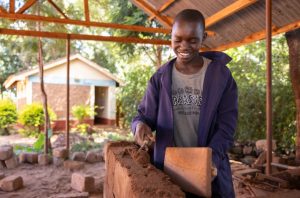
Dow, ChildFund set to bridge construction workers’ skills gap
Materials science leader Dow Chemical East Africa and ChildFund have launched an...
Read More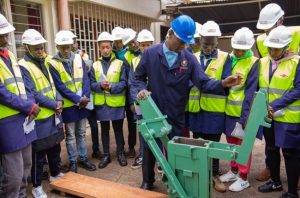
Dow, ChildFund launch artisans program to bridge construction worker’s skills gap
Through the partnership, Muguga Vocational Training Center will be transformed into a...
Read MoreContact Us
For more information, please write to: SGitau@ChildFund.org
SHARE VIA: